

Black dust around air vents may look like ordinary dust, but it can point to airflow leaks, soot, moisture, or filtration problems. Understanding the source can help you decide whether simple cleaning is enough or whether professional HVAC service is needed.
What Causes Black Dust Around Air Vents?
Black dust around air vents usually comes from airborne particles collecting where conditioned air enters or leaves a room. Common sources include household dust, candle soot, fireplace smoke, cooking residue, pet dander, tobacco smoke, outdoor pollution, renovation dust, and ordinary household debris.
The airflow around a vent can pull these particles toward the grille and nearby ceiling or wall surface. Moisture, static electricity, and oily residues make the particles adhere more easily, which gradually creates a dark stain. Very fine soot causes especially dark staining because its particles are smaller than ordinary household dust and can lodge in paint texture, caulk, and microscopic surface irregularities.
Other possible causes include air leaking around gaps between the duct boot and the ceiling or wall; dirty HVAC filters or filters that do not fit correctly; dust buildup inside return ducts, blower compartments, or air handlers; deteriorating internal duct insulation; combustion soot from a furnace, boiler, fireplace, or fuel-burning appliance; and humid conditions that allow microbial growth to develop on accumulated dust.
Why Does Black Dust Around Air Vent Form?
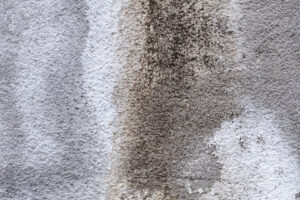
A patch of black dust around air vent edges often forms because air moves through the narrow gap around the outside of the vent cover, especially when the duct boot is not sealed tightly to the ceiling or wall.
This small air leak creates a filtration effect. Conditioned air escapes through the gap, and the surrounding surface traps fine dust, soot, and other particles. Over time, the deposit traces the hidden gap between the duct boot and the finished ceiling or wall, creating a dark outline of the vent. The pattern is sometimes called filtration staining or ghosting.
It tends to be more noticeable when the home contains candle, fireplace, or cooking soot; the HVAC system creates strong pressure differences; return-air pathways are restricted; the vent boot has gaps around its perimeter; the ceiling or wall is slightly damp or cooler than the surrounding surface; or the filter is overloaded, poorly fitted, or too restrictive for the system.
A second mechanism can occur at the face of the grille. The supply-air stream pulls nearby room air into its path. This room air may contain candle soot, cooking particles, textile fibers, and other contaminants. Repeated circulation concentrates them around the grille’s edges.
Surface temperature can sharpen the ring. A cold metal register may cool the nearby paint enough to create slight condensation or a tackier surface. Particles then adhere faster in that narrow band.
The location of black dust around air vent openings can help identify the cause. A sharply defined, clean, even outline around the outer edge often points to perimeter leakage around the vent assembly. Dark residue concentrated directly on the grille may indicate particle buildup in the room, contamination in the airflow, or both. Darkened screw heads and corners suggest localized air movement. A fuzzy halo may develop from air mixing around the grille. Brown or yellow edges can indicate cooking oils, nicotine, or previous water exposure.
What Does Air Vents Black Dust Mean?
In homes with several air vents black dust may appear in more than one room. This residue is evidence that airborne particles are being deposited. It does not measure the concentration of those particles or establish whether the air is hazardous. It is especially relevant when the residue appears quickly, affects many vents, or returns soon after cleaning.
When checking air vents black dust patterns become more meaningful if the residue returns within days or a few weeks, several rooms are affected, the HVAC filter becomes unusually dark, or occupants notice smoke, burning, oily, or musty odors. Other accompanying signs include frequent dust accumulation on furniture, eye, nose, or throat irritation, increased allergy or asthma symptoms, visible haze near candles or cooking areas, dark staining on walls or ceilings, condensation around vents, symptoms that appear or worsen while the system operates, or residue that is present during one season only.
A thin gray film that develops slowly may reflect normal household dust. Fast-forming, deep-black residue deserves closer investigation because soot and ultrafine combustion particles can spread widely before becoming visible.
Combustion soot requires prompt attention, particularly when the home has gas, oil, wood, or other fuel-burning equipment. Carbon monoxide alarms should be installed, functional, and placed according to local safety guidance.
Indoor particle monitoring can provide additional context. A consumer PM2.5 monitor may reveal spikes during frying, candle use, fireplace operation, or outdoor pollution events. The monitor cannot identify the particle source, though it can show when exposure rises.
Air Vents Black Mold Vs Dust
Use four clues together: pattern, texture, moisture, and regrowth.
Black dust on air vents is usually dry, loose, and easy to remove with a damp cloth or HEPA vacuum when the material is ordinary dust or soot. It often appears as a smooth gray or black film that follows airflow, especially along grille edges, blade edges, corners, the perimeter of the register, and nearby surfaces.
Possible mold growth is more likely to appear speckled, blotchy, fuzzy, slimy, or irregular; embedded in porous material; in an area with condensation, water damage, or persistent humidity; alongside a musty or earthy odor; soon after cleaning when moisture remains unresolved; or inside insulation, drywall, ceiling tiles, or duct liner. It is more concerning when the surface is damp, the paint is bubbling, or insulation is wet.
A simple wipe can provide clues, although it cannot confirm the material. Dust generally transfers evenly onto the cloth and often removes cleanly. Mold-like growth may smear, leave staining behind, or appear rooted in the surface.
Inspect the same spot over the following days or weeks. Rapid regrowth in a persistently damp area supports a moisture-related problem. Rapid return as a dry, even film supports an ongoing particle source.
Color is not a reliable identification method. Many molds can appear black, green, gray, brown, or white, and ordinary soot can look nearly identical from a distance. A bleach reaction, household mold kit, or visual comparison chart also cannot reliably determine what the material is or whether it presents a health risk.
Professional evaluation is appropriate when the material is widespread, keeps returning, appears inside insulated ductwork, follows water damage, or affects occupants with significant respiratory sensitivities. The priority is identifying and correcting the moisture source rather than relying only on surface sampling.
What Causes Black Dust From Air Vents?
Black dust from air vents may originate inside the HVAC system, which can generate, collect, or redistribute black material when particles are present inside the equipment or ducts.
Possible system-related sources include dust accumulated on the blower wheel or inside the air handler; a damaged, missing, incorrectly installed, or poorly sealed filter; gaps or return ducts that pull air from an attic, crawlspace, garage, wall cavity, or mechanical room; deteriorating fiberglass duct liner, insulation, foam gaskets, or other internal materials; construction debris or debris inside return ducts; soot from incomplete combustion or a malfunctioning heating appliance; rubber or belt material from older mechanical components; and contaminated condensate pans or damp internal insulation supporting microbial growth.
Inspect the HVAC filter first. Check the filter’s edges. Clean strips along the frame with a dirty center can indicate bypass. A filter covered uniformly with very fine black residue can point to soot or unusually high particle levels. Fibrous or flaky black debris may suggest degrading internal material.
The debris itself can help narrow the source. Fine powder often points to dust or soot. Lightweight flakes may come from a gasket, liner, coating, or insulation. Fibrous material suggests duct liner or nearby building insulation.
A licensed HVAC technician should inspect the system when black dust from air vents appears to come directly from the ducts, the furnace produces soot, the equipment smells burned, dark residue is concentrated near the furnace, or the residue returns rapidly throughout the home.
Why Does Black Dust On Air Vents Return?
Recurring black dust on air vents means the source is still active. The vent is usually the collection point, not the origin. Cleaning removes the visible deposit without stopping the airflow, moisture, or particle problem that created it.
The speed of recurrence is useful diagnostically. A dark ring returning within a few days suggests a strong soot source, major air leak, active moisture, or contamination near the vent. Recurrence within several weeks may point to filter bypass, frequent candle use, cooking aerosols, high particle levels, or pressure imbalance. A faint film developing over several months is commonly associated with normal particle accumulation.
Seasonal recurrence also provides useful evidence. A problem appearing only during heating season may be linked to combustion equipment, fireplace use, humidifier operation, or stronger stack-effect leakage. A problem appearing only during cooling season may indicate condensation, cold surfaces, attic leakage, or high indoor humidity.
To track air vents black dust, clean one vent, record the date, and photograph it weekly under similar lighting. Compare it with a vent in another room, and note whether the stain appears when heating, cooling, cooking, fireplace use, or candle burning increases. This simple log can show whether the problem is local, system-wide, seasonal, or linked to a household activity, and can help isolate the cause before repairs are made.
When Is Black Dust Around Air Vents Serious?
Black dust around air vents deserves professional investigation when it is accompanied by signs of system leakage, combustion trouble, moisture, or widespread contamination.
Visible particles or black dust from air vents require the system to be shut off so the equipment and ducts can be inspected. Excessive dust despite regular filter changes and black buildup returning shortly after cleaning may indicate filtration, leakage, or widespread contamination.
Condensation, dripping, water stains, a wet or rusty grille, or damaged or damp duct insulation may point to problems with humidity, insulation, duct temperature, condensate drainage, or moisture.
A burning, oily, smoky, or musty smell when the system starts requires investigation. Soot near the furnace, boiler, flue, or combustion appliance calls for prompt combustion-safety service.
Turn off fuel-burning equipment and leave the area when a carbon monoxide alarm sounds or when a combustion problem is suspected. Headaches, dizziness, nausea, or unusual fatigue when heating equipment operates are also emergency warning signs. Contact emergency services, the utility provider, or a qualified heating professional as appropriate.
A technician should evaluate system pressure when doors move on their own, rooms become difficult to open or close, return grilles whistle, airflow varies sharply between rooms, or uneven airflow is present. These signs can accompany restricted returns, oversized equipment, blocked vents, or duct leakage.
For non-emergency staining, an HVAC inspection may include the filter rack, blower assembly, heat exchanger area, supply and return ducts, duct pressure, air leakage, insulation condition, condensate drainage, and indoor humidity.
How To Clean Black Dust Around Air Vents
Before cleaning black dust around air vent surfaces, turn off the HVAC system so particles are not pulled into the air or carried deeper into the vent. Place a towel below the vent, photograph the stain, and note its shape. Start with a dry-removal method so the residue does not smear into the paint.
Use a HEPA-filtered vacuum with a soft brush attachment to collect loose dust from the grille and surrounding area without scraping the surface. Remove the grille carefully without disturbing insulation or reaching deep into the duct, and inspect both sides. Wash metal or washable plastic grilles with warm water and a small amount of mild dish detergent. Rinse and dry them completely before reinstalling.
Wipe the surrounding wall or ceiling with a lightly dampened microfiber cloth and mild detergent solution. Avoid saturating drywall, ceiling tiles, insulation, ceiling texture, or the opening around the duct. Dry the surface fully.
Inspect the opening for gaps, damp material, rust, loose insulation, or unusual debris. A visible gap between the duct boot and drywall can often be sealed with an appropriate HVAC sealant or other air-sealing product, or a technician can complete the repair. The vent cover should not be used to hide a large gap, damaged boot, or wet material.
Check the HVAC filter’s condition, size, fit, and installation direction. Replace it when it is dirty or overdue.
Wear gloves and consider a well-fitting particulate mask when the buildup is heavy. People with asthma, severe allergies, compromised immune systems, or other respiratory conditions should avoid disturbing suspected mold.
Do not force a household vacuum hose deep into the duct. It can damage flexible duct, loosen liner, or push debris farther into the system. Do not spray cleaner, bleach, fragrance, disinfectant, mold treatment, or other products deep into the duct. These products can damage materials, create irritating vapors, and leave moisture inside the system. Bleach is also poorly suited to many porous building materials.
When growth appears inside lined ducts, insulation, the air handler, or other porous HVAC components, professional cleaning or material replacement may be necessary.
How To Prevent Black Dust On Air Vents
Preventing black dust on air vents works best when each part of the deposition cycle is addressed: particle production, air movement, filtration, leakage, and surface moisture.
Use an HVAC filter with an efficiency rating that the equipment can safely handle. Install the correct size, confirm the airflow arrow faces the right direction, and make sure air cannot bypass the filter around its edges. Replace or clean it according to its condition, the manufacturer’s instructions, and household factors such as pets, construction, smoke, and allergy concerns.
Seal gaps around vent boots and accessible duct connections. Have leaking return ducts repaired, especially in attics and crawlspaces. Keep indoor humidity at a moderate, stable level to prevent condensation on registers. Use kitchen exhaust while cooking, particularly during frying, searing, and high-heat cooking. Run bathroom exhaust during and after showers. Reduce candle burning and choose low-soot alternatives. Maintain fireplaces, chimneys, furnaces, and fuel-burning appliances. Vacuum with a HEPA-filtered machine, clean vent grilles before thick deposits form, and keep furniture, rugs, and curtains from blocking return grilles. Schedule HVAC service when the blower or internal components are visibly dirty. Address roof leaks, plumbing leaks, condensation, and damp insulation promptly. Use portable HEPA filtration in rooms with recurring fine-particle problems.
Air duct cleaning is most useful when black dust on air vents is linked to confirmed heavy contamination, pest debris, construction material, visible growth, or substantial dust inside the ducts. Routine duct cleaning does not correct filter bypass, pressure imbalance, moisture, or an active soot source.